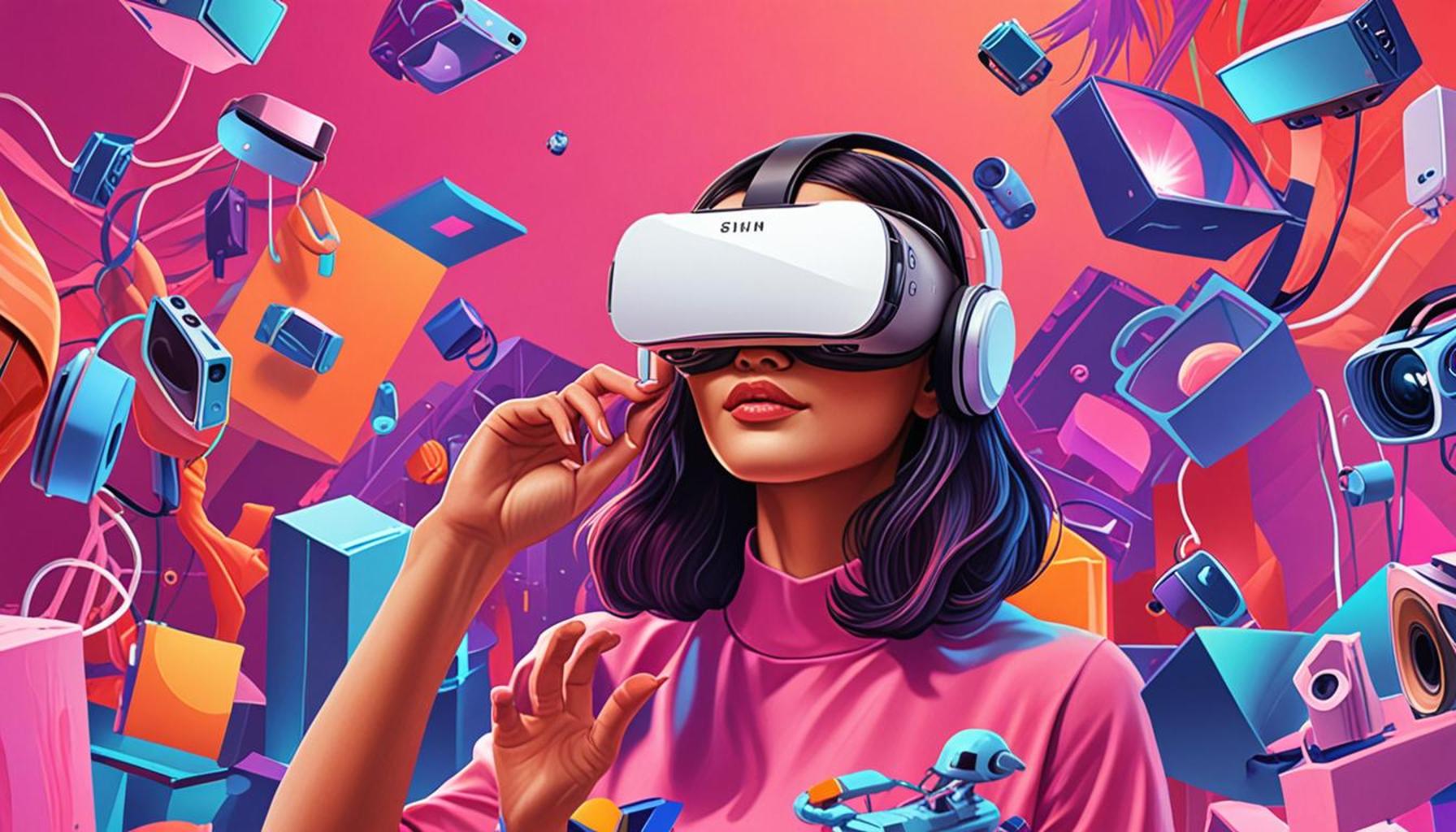
Virtual Reality as a Tool for Innovation in Product Development
Understanding the Impact of Virtual Reality on Product Development
In today’s fast-paced market, companies must innovate rapidly to stay ahead. One transformative technology making a significant impact on product development is Virtual Reality (VR). This technology immerses users in a three-dimensional environment, providing businesses with unparalleled opportunities for creativity and innovation that were previously impossible with traditional methods.
Benefits of Leveraging VR in Business
By harnessing the power of VR, businesses can achieve several key advantages that enhance their product development processes:
- Visualize concepts: Companies can quickly turn abstract ideas into realistic prototypes, allowing teams to visualize products in an immersive environment. For instance, architectural firms can create 3D models of buildings, enabling architects and clients alike to walk through designs and experience spaces before construction begins.
- Engage stakeholders: VR fosters collaboration by providing a shared virtual space where teams can interact and engage stakeholders from various locations. Think of a product design meeting where team members from different states can come together in a virtual room to discuss and tweak designs in real time, as if they were in the same physical space.
- Test products: Businesses can simulate real-world scenarios and test products before actual production begins. For example, in the sporting goods industry, companies can create virtual environments where athletes can test gear under different conditions, ensuring the products perform optimally.
Real-World Applications of VR
Numerous industries are already utilizing VR to enhance their product development efforts. For instance:
- In the automotive industry, leading manufacturers use VR technology to design vehicles. Engineers can manipulate designs in 3D and simulate driving experiences, allowing for immediate feedback and adjustments.
- Fashion brands are increasingly adopting VR to create virtual showrooms. This allows customers to explore collections interactively, trying on clothes virtually or visualizing how outfits would look without the need for physical samples. This not only enhances customer engagement but also reduces the environmental impact of sample production.
- The medical field utilizes VR to create simulations for training medical professionals. Surgeons can practice procedures in a risk-free environment, honing their skills before operating on real patients.
As we explore the capabilities of VR, it is critical to recognize its potential not just as a tool, but as a catalyst for transformative change in product development. By integrating this innovative technology, organizations can not only stay competitive but also pioneer new avenues for creativity and improvement in their offerings.
Ultimately, the adoption of VR can lead to enhanced efficiency and creativity across various sectors, helping businesses navigate the complexities of modern product development with greater ease and effectiveness.
Unlocking Creativity: How VR Enhances the Product Development Process
As businesses strive to differentiate themselves in an increasingly crowded marketplace, the need for innovation has never been more pressing. Virtual Reality (VR) emerges as a critical player in this arena, providing organizations with a platform that not only enhances creativity but also streamlines the product development lifecycle. By integrating VR technology, companies can transform the way they conceive, design, and refine their products, leading to more effective and imaginative outcomes.
Transforming the Ideation Phase
The ideation phase is crucial in product development, where initial ideas are born and shaped into tangible concepts. VR can revolutionize this phase by offering a dynamic environment where ideas can be visualized and manipulated. Using immersive VR tools, teams can create three-dimensional representations of their concepts, allowing for:
- Instant visualization: Instead of relying on sketches or 2D prototypes, teams can interact with 3D models, gaining a deeper understanding of the product’s design and function.
- Enhanced creativity: The immersive nature of VR encourages brainstorming sessions to flourish. Teams can explore various design iterations in real-time, providing instant feedback and facilitating a more fluid creative process.
- Reduced iteration time: With the ability to visualize and modify designs quickly, businesses can spend less time on revisions and more time on refining ideas that resonate with their vision and target market.
By utilizing VR at this initial stage, companies not only enhance their ideation process but also create an environment where collaboration thrives. It empowers team members to engage actively and give input, ensuring that a diverse range of perspectives contributes to the final product concept.
Streamlining Prototyping and Testing
Once an idea matures into a prototype, the next step is rigorous testing. VR plays a pivotal role in this phase, allowing for interactive simulations that provide realistic insights into how a product will perform in the real world. This capability is particularly advantageous across several industries, including:
- Consumer electronics: Companies can simulate how a device interacts with users, allowing for adjustments in usability and functionality before mass production.
- Healthcare: VR can model medical devices, enabling professionals to understand their applications and effectiveness without the risk involved in real-world testing.
- Entertainment: Game developers can utilize VR to create immersive gameplay experiences, testing user interactions and engagement levels before the product launch.
By leveraging VR in prototyping and testing, businesses reduce the cost and time associated with traditional testing methods. Moreover, this innovative approach leads to enhanced product quality, as potential issues can be identified and addressed early in the development process.
The integration of Virtual Reality in product development not only fosters creativity and collaboration but also streamlines testing procedures, resulting in innovative products that align with market demands. As the technology continues to evolve, its role as a vital tool in this landscape will become increasingly significant, offering businesses the means to stay agile and competitive.
Enhancing Collaboration: The Role of VR in Team Dynamics
Effective collaboration is essential in the product development process. Virtual Reality not only fosters creativity and streamlines prototyping but also significantly enhances collaboration among team members. In traditional settings, geographical barriers can create challenges for dispersed teams. However, VR breaks down these barriers, allowing for seamless interaction among stakeholders regardless of their physical locations. This transformation leads to improved teamwork and a more integrated approach to product development.
Creating Shared Spaces
One of the most distinctive benefits of VR in collaboration is the ability to create shared virtual spaces. These immersive environments help team members come together, interact, and communicate more effectively, mirroring in-person collaboration. Some advantages include:
- Real-time interaction: Team members can brainstorm, review designs, and share feedback in real-time, which facilitates a more responsive design process.
- Visual alignment: Everyone can view the same virtual model, ensuring that discussions are anchored in a common point of reference, which minimizes misunderstandings and enhances clarity.
- Inclusivity: Teams can include members from diverse backgrounds and skill sets in the design process, fostering a richer mix of inputs and perspectives that can lead to innovative solutions.
With these shared virtual spaces, collaboration transcends traditional limitations and takes on a new dimension that aligns with the fast-paced demands of modern product development.
Facilitating Customer Feedback and User Testing
Another critical aspect of product development is gathering feedback directly from customers or end-users. Virtual Reality provides a unique opportunity for businesses to engage their target audience in the development process through user testing and feedback sessions in a controlled, immersive setting. This approach yields numerous benefits, such as:
- Enhanced user experience insights: By allowing potential users to interact with a VR model of the product, companies can gather direct feedback on usability, functionality, and overall experience before the product is even launched.
- Behavioral observation: VR enables companies to observe how users engage with their product in real-time, offering invaluable insights into user behavior that static surveys or focus groups may miss.
- Iterative refinement: Continuous feedback loops can be implemented, allowing for rapid adjustments to designs based on user experience, mitigating the risk of costly changes later in the production cycle.
This dynamic, user-centered approach not only aids in developing products that better meet market needs but also strengthens the connection between the company and its customers, resulting in increased loyalty and satisfaction.
Cost-Efficiency: Maximizing Resources with VR
In an age where companies are constantly evaluating their expenses, Virtual Reality offers a cost-efficient option for product development. While initial investments in VR technology may appear steep, the long-term financial benefits can be substantial. For instance:
- Reduced prototyping costs: Physical prototypes can be expensive and time-consuming to produce. With VR, companies can create and test designs at a fraction of the cost, enabling multiple iterations without the financial burden of physical materials.
- Decreased time to market: By accelerating the ideation and testing phases using VR, companies can bring their products to market faster, resulting in improved competitive positioning and increased revenue potential.
- Lower risk of failure: Early identification of design flaws through VR simulations means that costly mistakes later in the process can be avoided, safeguarding both resources and time.
The integration of Virtual Reality into product development not only promotes collaborative innovation and customer-centric design but also offers a promising avenue for cost savings. As more businesses recognize these advantages, VR is poised to reshape the approach to product development across various industries.
Conclusion: Embracing the Future of Product Development
As we move deeper into an era driven by technological advancement, Virtual Reality stands out as a transformative tool for innovation in product development. Its ability to foster collaboration among remote teams, create shared spaces for brainstorming, and facilitate real-time customer feedback revolutionizes how businesses approach design and production. Through immersive VR environments, teams can visualize concepts collectively, which not only enhances communication but also reduces the likelihood of misunderstandings that often arise from geographical barriers.
The advantages of VR extend well beyond just enhancing team dynamics. By integrating user testing within the virtual realm, companies can gather invaluable insights that aid in fine-tuning products to meet customer needs more effectively. This iterative process fosters a user-centric approach that is essential in today’s competitive market, ultimately leading to products that resonate with consumers.
Moreover, the cost-efficiency offered by VR cannot be overstated. With reduced prototyping expenses and accelerated time to market, businesses can allocate their resources more wisely and minimize risks of costly errors. As organizations recognize these multifaceted benefits, it becomes evident that Virtual Reality is not merely a trend but a strategic advantage that can redefine product development processes.
In conclusion, as the landscape of product development continues to evolve, embracing Virtual Reality as an innovation tool will not only enhance creativity and collaboration but also secure a competitive edge in an ever-changing marketplace. Companies that invest in this technology will likely find themselves leading the charge in delivering exceptional products tailored to a dynamic consumer base.

Linda Carter
Linda Carter is a writer and expert known for producing clear, engaging, and easy-to-understand content. With solid experience guiding people in achieving their goals, she shares valuable insights and practical guidance. Her mission is to support readers in making informed choices and achieving significant progress.